Biggest Tcl Qm7K Qd Mini Led Tv Buying Mistakes (And How to Avoid Them)
The television market has undergone a radical transformation in the last few years, moving away from standard LED backlighting toward more sophisticated technologies like Mini-LED and Quantum Dots. Among the most talked-about mid-to-high-end displays in the current landscape is the TCL QM7K QD-Mini LED TV. Positioned as a high-performance alternative to much more expensive flagship models, it offers a compelling blend of peak brightness, local dimming precision, and vibrant color reproduction. However, because this television occupies a specific niche—the "premium value" segment—many consumers find themselves making critical errors during the purchase process. Buying a TV of this caliber involves more than just checking the price tag; it requires an understanding of how Mini-LED works, the importance of dimming zones, and how the specific environment of your home will interact with the screen's hardware.
In this comprehensive guide, we will analyze the TCL QM7K in depth, explore the common pitfalls that buyers encounter, and provide actionable advice on how to ensure your investment delivers the cinematic or gaming experience you expect. Whether you are upgrading from an older 4K LED or considering moving away from OLED, avoiding these mistakes will help you master the nuances of the QM7K's performance.
Understanding the TCL QM7K QD-Mini LED Technology
Before diving into the mistakes, it is essential to understand what makes the TCL QM7K unique. The "QM" designation refers to its hybrid nature: it uses a Quantum Dot layer (the "Q") for enhanced color and a Mini-LED backlight (the "M") for illumination. Unlike traditional LEDs, which use relatively large light-emitting diodes, Mini-LEDs are significantly smaller, allowing for thousands of them to be packed into the panel. This density enables "Local Dimming," where the TV can shut off or dim specific sections of the backlight to achieve deep blacks, similar to OLED, while maintaining the high peak brightness that LEDs are known for.
The QM7K specifically is designed to bridge the gap between entry-level Mini-LEDs and the ultra-premium QM8 series. It features a high refresh rate, sophisticated processing for motion and upscaling, and a high count of local dimming zones. This makes it a "jack-of-all-trades" display, suitable for bright living rooms, dedicated home theaters, and gaming consoles like the PlayStation 5 or Xbox Series X.
Mistake #1: Underestimating the Importance of Room Lighting
One of the biggest errors buyers make is failing to match the TCL QM7K’s capabilities to their specific room environment. The QM7K is an exceptionally bright television. While many shoppers prioritize "inky blacks," they often forget that in a room with large windows or heavy daytime usage, a TV’s ability to fight glare and maintain visibility is actually more important. Conversely, some buyers put this high-brightness powerhouse in a completely pitch-black room and then find the "blooming" (light bleed around bright objects) to be distracting.
How to Avoid This: Evaluate your lighting. If you have a room with significant sunlight, the QM7K is one of the best choices available because its peak brightness can overcome reflections that would wash out an OLED. If you are using it in a dark basement, be prepared to spend time calibrating the local dimming settings. Choosing the "Low" or "Medium" local dimming setting in a dark room can often reduce the harshness of the transition between dark and light areas, creating a more natural image.
Mistake #2: Ignoring the "Dimming Zone" to Screen Size Ratio
Consumers often look at the total number of dimming zones as a flat metric of quality. However, a common mistake is not realizing that dimming zone performance varies by screen size. A 65-inch QM7K and an 85-inch QM7K may have different zone counts, and the physical size of those zones matters for image "blooming." In larger screen sizes, the backlight has more surface area to cover; if the zone count doesn't scale appropriately, you may notice clusters of light behind subtitles or stars in a night sky.
How to Avoid This: When looking at the QM7K, check the specifications for the specific size you intend to buy. Generally, with TCL’s QD-Mini LED technology, the higher the size, the more zones are required to maintain that "OLED-like" black level. If you are sensitive to blooming, going for the 75-inch or 85-inch models often yields a more impressive local dimming experience simply because the sheer volume of LEDs allows for more granular control over the image.
Mistake #3: Overlooking HDMI 2.1 and Gaming Bandwidth Needs
Modern gaming consoles and PC GPUs require massive amounts of bandwidth to display 4K resolution at 120Hz or even 144Hz. A frequent mistake for QM7K buyers is assuming all HDMI ports are created equal. Many users plug their high-end gaming PC or console into the first available port, only to find they are capped at 60Hz or are missing features like VRR (Variable Refresh Rate) and ALLM (Auto Low Latency Mode).
How to Avoid This: The TCL QM7K typically features specific ports designated for high-frame-rate gaming. Ensure you identify which ports support 4K/120Hz or 4K/144Hz. Additionally, many buyers forget to use a "Certified Ultra High Speed" HDMI cable. Using an old cable from five years ago with a new QM7K will result in signal dropouts or an inability to use HDR10+ and Dolby Vision Gaming effectively.
Mistake #4: Mismanaging the "Soap Opera Effect" and Processing Settings
The TCL QM7K comes with a powerful processor designed to smooth out motion and sharpen low-resolution content (like cable TV or older DVDs). A major mistake new owners make is leaving the "Motion Clarity" or "Smoothing" settings on their default factory levels. This often leads to the "Soap Opera Effect," where movies look like they were filmed on a cheap camcorder, or where fast-moving objects have strange artifacts trailing behind them.
Shop the latest TVs & Home Theater picks on Amazon.
View Offers →How to Avoid This: Upon unboxing, navigate to the picture settings. For a cinematic experience, it is highly recommended to turn off or significantly lower the "Blur Reduction" and "Judder Reduction" settings. TCL’s "Director Mode" or "Movie Mode" usually provides the most accurate color temperature and disables unnecessary processing, allowing the Mini-LED panel to show the content as the creator intended.
Mistake #5: Setting the TV Too High (The "r/TVTooHigh" Syndrome)
While this is a general home decor mistake, it impacts the QM7K more than other sets due to the nature of VA (Vertical Alignment) panels often used in high-contrast Mini-LED TVs. VA panels provide excellent contrast when viewed head-on, but the colors and contrast can shift or "wash out" when viewed from an angle. Mounting the TV high above a fireplace forces the viewer to look up at an angle, which degrades the very picture quality you paid a premium for.
How to Avoid This: The center of the TCL QM7K screen should be at eye level when you are seated. If you must mount it higher, ensure you use a tilting mount to angle the screen down toward your seating position. This ensures that the light from the Mini-LED backlight is hitting your eyes directly, preserving the deep blacks and vibrant colors of the Quantum Dot layer.
Detailed Product Analysis: TCL QM7K QD-Mini LED TV
The TCL QM7K stands as a testament to how far budget-friendly manufacturers have come. Historically, TCL was viewed as a "value" brand, but the QM7K competes directly with mid-range offerings from Sony and Samsung. Its hardware architecture is built around a high-refresh-rate panel with a native 120Hz/144Hz capability, which is a significant step up from the 60Hz panels found in entry-level 4K TVs.
The "QD" in the name stands for Quantum Dots, which are tiny nanocrystals that emit specific colors when hit by light. In the QM7K, this results in a wider color gamut, particularly in the reds and greens, which makes HDR (High Dynamic Range) content "pop." When you watch a sunset or a colorful animated film, the QM7K displays shades that standard LEDs simply cannot reach. Coupled with the Mini-LED backlight, which provides the "punch" or brightness, the TV handles high-contrast scenes with ease.
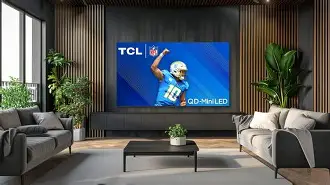
In terms of software, the QM7K usually runs on a smart TV platform like Google TV. This provides a massive advantage in terms of app availability and voice control. However, the internal hardware of the TV needs to be robust enough to handle these smart features without lag—something TCL has improved upon significantly in the QM7K series compared to older generations. The integration of Dolby Vision and HDR10+ ensures that no matter where you get your 4K content, the TV can decode the best possible version of the signal.
Pros and Cons of the TCL QM7K
- Pro: Exceptional Peak Brightness – One of the brightest TVs in its price class, making it ideal for well-lit living rooms and HDR highlights.
- Pro: Quantum Dot Color – Delivers vivid, accurate colors that cover a high percentage of the DCI-P3 color space.
- Pro: Advanced Gaming Features – Supports 144Hz VRR, FreeSync, and specialized Game Bar features for low input lag.
- Pro: Local Dimming Precision – The high count of Mini-LED zones significantly reduces blooming compared to standard full-array sets.
- Con: Off-Angle Viewing – Like most VA panels, the image quality degrades if you are sitting far to the side of the screen.
- Con: Reflective Screen – While it is bright, the screen coating can still show distinct reflections of lamps or bright objects in a room.
- Con: Out-of-the-Box Calibration – The default "Vibrant" or "Standard" modes are often too blue and oversaturated, requiring manual adjustment.
TCL QM7K vs. Competitors: A Comparison
Choosing the QM7K often involves comparing it to other technologies like standard LED (Full Array) and OLED. The following table illustrates where the QM7K sits in the current market hierarchy.
| Feature | Standard LED (Budget) | TCL QM7K (QD-Mini LED) | Premium OLED |
|---|---|---|---|
| Backlight Technology | Full Array or Edge-Lit | QD-Mini LED (Thousands of LEDs) | Self-emissive (No backlight) |
| Peak Brightness | 300 - 500 nits | Over 1500+ nits | 600 - 1000 nits |
| Black Levels | Greyish blacks in dark rooms | Deep blacks with minimal blooming | Perfect, absolute blacks |
| Color Volume | Standard RGB | High (Quantum Dot) | Very High |
| Price Point | Low | Mid-Range (Value Leader) | High |
| Best For | General viewing, news, kids' rooms | Daytime viewing, HDR movies, gaming | Dedicated dark home theaters |
Comprehensive Buying Guide: Getting the Most Out of Your QM7K
If you have decided that the TCL QM7K is the right TV for you, following a structured buying and setup process will ensure you don't fall into the traps mentioned earlier. This guide covers the journey from the store to your sofa.
Step 1: Determine Your Ideal Size
Because the QM7K offers such high resolution and brightness, you can often go "one size larger" than you think. For 4K content, the recommended viewing distance is much closer than it was for 1080p. For a 65-inch QM7K, a distance of about 5.5 to 9 feet is ideal. If your sofa is more than 10 feet away, you should strongly consider the 75-inch or 85-inch models to truly appreciate the detail of the Mini-LED zones.
Step 2: Plan Your Audio Setup
While the QM7K has decent built-in speakers for a flat-screen TV, no television of this thickness can produce true cinematic sound. The QM7K supports Dolby Atmos pass-through via eARC (Enhanced Audio Return Channel). To avoid the mistake of "great picture, tiny sound," budget for at least a 3.1 channel soundbar or a dedicated receiver and speaker setup. This will match the scale of the audio to the scale of the visual performance.
Looking for the best TVs & Home Theater deals on Amazon?
Shop Amazon →Step 3: Initial Setup and Calibration
Once you have the TV, do not stick with the default settings. Most TCL TVs ship in a "Store" or "Power Saving" mode that limits brightness or distorts colors. Switch the TV to "Movie" or "Cinema" mode immediately for SDR content. For HDR content, ensure "HDMI 2.1" or "Enhanced" mode is enabled in the input settings so the TV can receive the full metadata from your 4K Blu-ray player or streaming device.
Step 4: Testing for Panel Uniformity
A common "mistake" is not checking for defects during the exchange window. Run a "Grey Scale Test" (available on various video platforms) to check for "Dirty Screen Effect" (DSE). This is when there are dark patches on the screen, most visible during sports like hockey or soccer. While no panel is perfect, if your QM7K has severe dark spots in the center of the screen, you should exchange it immediately while within the retailer's return period.
Step 5: Firmware Updates
TCL frequently releases software updates that improve the local dimming algorithms. A common mistake is leaving the TV offline. Connect it to your home Wi-Fi and check for system updates during the first hour of ownership. These updates can significantly improve how the TV handles "black crush" (losing detail in dark areas) and can even lower input lag for gamers.
Real-World Use Cases: Why Buyers Choose the QM7K
To understand how to avoid mistakes, it helps to look at why different types of users buy this TV in the first place.
The Sports Enthusiast: These buyers care about motion handling and brightness. The mistake they often make is using "Sports Mode," which usually makes the grass look neon green. Instead, they should find that the QM7K’s high brightness makes it perfect for afternoon games, but they should use a "Custom" setting with just a touch of motion interpolation to keep the ball from flickering during fast plays.
The Movie Buff: This user is looking for a theater experience on a budget. Their biggest mistake is ignoring the room's bias lighting. Adding a small LED strip behind the QM7K can improve the perceived black levels and reduce eye strain, making the Mini-LED backlight appear even more contrast-heavy than it already is.
The Next-Gen Gamer: These buyers are all about the specs. Their biggest mistake is not configuring the console settings. On a PS5 or Xbox, you must run the HDR Calibration tool after setting the TV to Game Mode. This tells the console exactly how bright the QM7K can get, ensuring that highlights aren't "clipped" or blown out in games like Elden Ring or Forza Horizon.
Conclusion
The TCL QM7K QD-Mini LED TV represents a significant milestone in display technology, offering premium features at a price point that was unthinkable just a few years ago. However, the complexity of its Mini-LED backlight and Quantum Dot color system means that a "plug-and-play" approach often leads to a sub-optimal experience. By avoiding the common mistakes of ignoring room lighting, misconfiguring HDMI ports, and neglecting proper motion settings, you can unlock the full potential of this display.
Buying a television is as much about the environment and the source material as it is about the panel itself. The QM7K is a versatile performer that excels in bright rooms and provides a stunning HDR experience for movies and gaming alike. If you take the time to choose the right size, calibrate the settings for your specific needs, and ensure your cables and consoles are up to date, the QM7K will serve as a high-performance center for your home entertainment for years to come. The key is to remember that the hardware is only half the battle; the "buying mistake" isn't just picking the wrong TV, but failing to respect the specific needs of the technology you have brought into your home.