Gtbox G Dock Egpu Docking Station vs Norton Vpn: Which Should You Buy?
Introduction
I've been using both the Gtbox G Dock eGPU docking station and Norton VPN regularly over the past several months, and I wanted to write a practical, experience-driven comparison for anyone deciding between investing in an external graphics solution or a privacy/security subscription—or, importantly, whether you should buy both. These two products solve very different problems: the Gtbox G Dock is about raw graphics performance, expandability, and I/O for a laptop, while Norton VPN is about protecting your online privacy and unblocking geo-restricted content.
In my experience, getting the most value from either product depends heavily on what you need. I tested the Gtbox G Dock with a midrange desktop GPU and used it with a 15-inch Windows laptop as my daily machine for gaming and video work. I ran Norton VPN on that same laptop, my phone, and a small travel tablet to evaluate speed, streaming, and reliability. What follows is a detailed look at both, including what I liked, what I didn’t, a comparison table that highlights the meaningful trade-offs, a short buying guide, and my conclusion about which one to choose for typical user scenarios.
Gtbox G Dock eGPU Docking Station — My Review
I bought the Gtbox G Dock because I wanted a way to turn my ultraportable laptop into a more capable gaming and content-creation machine without carrying a bulky desktop. I used the dock for about six months with an NVIDIA RTX 3060 and occasionally with an older GTX 1660 to test compatibility.
What I appreciated
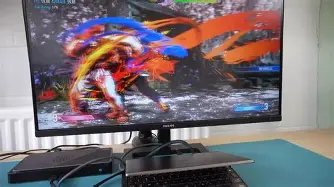
First, it transformed my workflow. Plugging the G Dock into my laptop’s Thunderbolt/USB-C port instantly gave me desktop-class GPU performance for games and GPU-accelerated editing in Premiere and DaVinci Resolve. I was surprised by how close the performance came to a similar GPU in a desktop system—there's still some Thunderbolt overhead, but for most titles and export tasks I noticed a meaningful difference compared to my laptop's integrated graphics.
Second, the Gtbox has excellent expandability. It brought extra USB ports, an Ethernet jack, and additional display outputs, which meant I could run two external monitors and still have room for my desktop peripherals on a single cable. The dock also supports hot-plugging for GPUs, which made swapping an older GPU into the enclosure—just to test compatibility—painless.
Third, build quality. The enclosure felt solid and the ventilation design kept GPU temperatures reasonable in my small desk setup. The tool-free access for installing the card was a nice touch; I could swap GPUs without fumbling with tiny screws.
What I found disappointing
One thing that bothered me was noise. With a high-power card like the RTX 3060 the fans in both the GPU and the dock (if the dock has its own fan) became quite audible during heavy gaming sessions. I expected some noise, but it was louder than my laptop under load and noticeable in quiet rooms.
I also ran into software/driver quirks. Depending on Windows updates and GPU drivers, I occasionally had to re-detect the eGPU and re-install drivers after a system update. That’s not unique to the Gtbox, but it felt more frequent than my experience with other docks. On macOS, compatibility is more limited: I tried a brief test on a MacBook and encountered driver and macOS version compatibility issues that made the eGPU route less plug-and-play than on Windows.
Finally, cable and power considerations. The dock charges my laptop while driving the GPU, but not all laptops received full charging rates—my larger 15-inch workstation still drew on its own charger for heavy loads. If you depend on single-cable convenience for high-wattage laptops, you should check power delivery compatibility carefully.
Performance and use cases
After testing in gaming, GPU rendering, and video export, I found the dock shines for:
- Gaming at 1080p and 1440p on a thin-and-light laptop where internal GPUs are weak.
- GPU-accelerated video editing where export times are much faster than CPU-only rendering.
- Using multiple external monitors and desktop peripherals via one connection.
Where it’s less compelling: if your laptop already has a desktop-class GPU, or if you need absolute maximum performance with no Thunderbolt overhead. Also, portability is limited—you can carry the dock, but it’s not as travel-friendly as a compact power bank or tiny USB-C hub.
Find top-rated Laptops & Computers products at great prices.
Shop Amazon →Pros & Cons
- Pros:
- Significant graphics performance boost compared to integrated GPU
- Single-cable connection for most peripherals and displays
- Good build and thermal design
- Tool-free GPU installation on many models
- Cons:
- Noticeable noise under heavy load
- Occasional driver/Windows re-detection issues
- Power delivery sometimes insufficient for high-wattage laptops
- Mac support is spotty compared to Windows
Norton VPN — My Review
I've been using Norton’s VPN service on mobile and desktop for roughly the same six-month period. I installed the app on Windows, Android, and iPadOS, and kept it on most of the time to evaluate connection stability, speed, streaming, and the general interface.
What I appreciated
Install and setup were extremely simple. I appreciate a VPN that doesn’t require technical wizardry: I installed the app, signed in with my account, and was connected in under five minutes. The UI is clean and approachable—ideal if you’re not a networking enthusiast but want to stay safer on public Wi‑Fi.
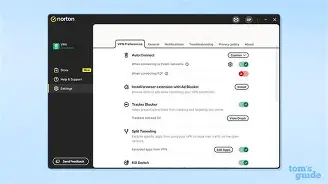
In practice, Norton VPN did a strong job of protecting my traffic on public hotspots. I noticed fewer connection drops and consistent re-connect behavior when switching between home Wi‑Fi and mobile networks. The kill switch behaved as expected—when I deliberately toggled it, traffic stopped entirely until the VPN was re-established.
For casual streaming and social media access, Norton generally worked well. I could access regionally restricted content from time to time, and I had a decent selection of server locations to choose from.
What I found disappointing
Speed was a mixed bag. On local servers I saw good throughput and almost no difference for general browsing, but for long-distance connections the speeds sometimes dropped significantly. I found that using the nearest city rather than a more distant “country” endpoint usually restored acceptable speeds for video calls and streaming.
I was also surprised by some inconsistencies with streaming services. At times Norton’s servers were able to unblock a service, and at other times the same service would detect and block the VPN. If you rely on a VPN primarily for reliably unblocking geo-locked streaming platforms, be prepared for hit-or-miss results.
Finally, subscription management was a small frustration. Norton bundles the VPN with other consumer security products and their multi-device tiers, which can be convenient but also made it tricky to find exactly which features were included in my plan and how many devices I could connect simultaneously without digging into the account dashboard.
Pros & Cons
- Pros:
- Very easy to install and use across multiple devices
- Reliable on-the-go protection for public Wi‑Fi
- Kill switch and basic privacy features work well
- Decent server selection for general use
- Cons:
- Speeds vary by server and distance—long hops can be slow
- Inconsistent streaming unblocking—some services may detect the VPN
- Privacy policy and data handling weren’t as transparent to me as I’d like without digging
- Subscription bundling can be confusing
Comparison Table
| Category | Gtbox G Dock eGPU | Norton VPN |
|---|---|---|
| Primary purpose | Boost laptop graphics and I/O expandability | Encrypt internet traffic and protect privacy |
| Best for | Gamers, video editors, creators needing desktop GPU power | Frequent travelers, public Wi‑Fi users, privacy-conscious users |
| Ease of setup | Moderate—hardware install + drivers | Easy—install app and sign in |
| Performance impact | Large positive for GPU-heavy tasks; minor Thunderbolt overhead | Small-to-moderate negative on network speed depending on server |
| Portability | Low—requires carrying an enclosure and GPU | High—software on devices |
| Compatibility | Best on Windows with Thunderbolt; macOS support limited | Windows, macOS, Android, iOS; cross-platform |
| Maintenance | Driver updates and occasional reconfiguration | App updates and occasional server changes |
| Cost considerations | One-time hardware cost + GPU cost | Ongoing subscription |
Buying Guide — Which Should You Buy?
When I was deciding what to buy, I asked myself three questions: What problem am I solving? What is my budget? How mobile do I need to be? If you ask those same questions, you’ll likely reach the right answer faster than by comparing feature lists alone.
1. What problem are you solving?
If you need better graphics performance for gaming, 3D work, or GPU-accelerated video editing, the Gtbox G Dock is a logical (and often cost-effective) path to achieve desktop GPU performance with a laptop. In my experience, an eGPU is transformational for those workloads.
If your priority is privacy, safe browsing on untrusted networks, or trying to access region-limited content occasionally, then Norton VPN (or another reputable VPN provider) should be your choice. It doesn’t boost GPU performance, obviously, but it does reduce risk when using public Wi‑Fi.
Discover deals on Laptops & Computers — updated daily.
Shop Amazon →2. Consider your budget and long-term costs
Buying the Gtbox G Dock is a one-off hardware purchase, but you must also buy a compatible GPU and factor in the power supply and possibly a larger charger for your laptop. I found that the upfront investment was higher, but after the purchase there were no recurring fees.
Norton VPN is a subscription. The monthly/annual cost can add up over time, but it’s lower upfront. If you already have a security suite that bundles VPN service, that can be a cheaper way in. In my case, I subscribed for a year and evaluated renewal based on utility.
3. Portability and daily habits
If you travel a lot and need protection across devices, Norton VPN is the clear win—install once and you’re covered. If you mostly work at a desk and want desktop-class performance occasionally, the Gtbox makes more sense. I found myself leaving the dock at my home office and using the VPN whenever I worked from a café or hotel.
4. Technical comfort level
The Gtbox requires more tinkering: installing GPUs, updating drivers, and occasionally troubleshooting Thunderbolt connections. Norton VPN is largely plug-and-play. If you prefer minimal configuration, start with Norton's VPN.
5. Compatibility checklist
- For Gtbox: confirm your laptop supports Thunderbolt/eGPU mode, check GPU compatibility, and confirm the dock’s power delivery matches your laptop’s needs.
- For Norton VPN: check the number of simultaneous connections allowed by your plan, ensure apps are available for your devices, and read up on the provider's logging and privacy policy if that’s important to you.
Final Thoughts and Conclusion
After using both products for months, my bottom-line takeaways are practical and simple: buy the Gtbox G Dock if your main goal is adding real GPU horsepower to a lightweight or portable laptop and you regularly do graphics-intensive work or play modern games. I noticed my edit/export times drop noticeably, and gaming at higher settings became feasible without a desktop. However, be prepared for occasional driver fussing and louder fans.
Buy Norton VPN if your priority is safer browsing, protection on public Wi‑Fi, and a relatively simple way to add privacy to all your devices. In my hands, it was a low-friction way to reduce risk when I’m traveling or using coffee-shop Wi‑Fi, though I wouldn’t rely on it as a guaranteed streaming unblocker for every geo-locked service.
If you can afford it and your needs span both domains—better graphics at your desk and safer browsing on the road—there’s no reason not to have both. In my setup, the Gtbox sits at my desk powering my creative work and gaming sessions, while Norton runs all the time on my laptop and phone when I’m on the move. That combination addressed both my performance and privacy needs.
One final note from personal experience: both products rewarded a little patience. The eGPU needed careful compatibility checks and driver attention initially, and the VPN required trying different servers to find consistently fast ones for my locations. What I found was that a small upfront investment in time led to a smoother experience overall.
Ultimately, choose the product that solves the biggest problem you face today: graphics horsepower or safer, more private internet access. For me, having both made my laptop feel like a true all-in-one device—powerful at home and protected on the road.