Should You Upgrade from Hohem Isteady V3 Ultra to Apple Iphone 17 Pro?
Introduction
The decision to "upgrade" from a dedicated stabilizer such as the Hohem iSteady V3 Ultra to a modern flagship smartphone like the Apple iPhone 17 Pro is not a straightforward one. On the surface it sounds like comparing apples and gimbals: one is a hardware accessory that stabilizes a camera, and the other is a complete pocket computer with an integrated camera system. Yet the gap between camera accessories and smartphone camera systems has narrowed considerably. This article examines practical, real-world use cases and buyer priorities to help determine when a smartphone replacement makes sense, when a gimbal still adds value, and what compromises buyers should expect.
What buyers typically care about
When evaluating whether to replace a gimbal with a phone (or vice versa), most buyers evaluate the decision along a few clear axes:
- Stabilization quality — How smooth are handheld shots without post-processing?
- Image and video quality — Resolution, low-light performance, dynamic range.
- Flexibility and creative control — Ability to do complex movements, long timelapses, or controlled motion paths.
- Portability and convenience — Weight, setup time, and whether one device can cover most needs.
- Battery life and runtime — How long a device or accessory can capture footage on a single charge.
- Cost and long-term value — Upfront cost and whether one purchase replaces the need for multiple accessories.
Product overviews
Hohem iSteady V3 Ultra — a quick look
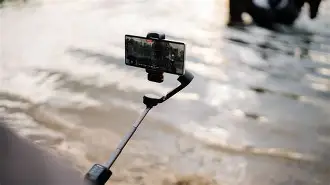
The Hohem iSteady V3 Ultra is a compact three-axis smartphone gimbal designed for creators who want physical stabilization and a range of creative motion options. It offers motorized stabilization, several follow and lock modes, physical controls for pans and tilts, and features such as time-lapse, hyperlapse, and object tracking through a companion app. For many content creators it represents an affordable, reliable step up from handheld phone footage without a stabilizer.
Apple iPhone 17 Pro — a quick look
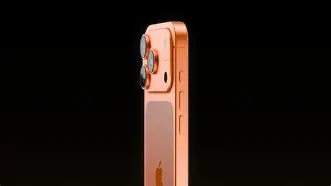
The Apple iPhone 17 Pro is Apple’s flagship smartphone offering (the discussion below treats it as representative of modern flagship smartphones). As with recent generations, Apple continues to invest heavily in computational photography and video, including advanced stabilization algorithms, sensor-shift and optical stabilization, cinematic modes, and real-time HDR. The iPhone 17 Pro aims to make polished footage easier to achieve without external accessories, and it adds hardware and software features designed for creators — such as professional codecs, improved low-light capture, and camera-centric tools on-device.
Detailed analysis: Where each solution shines
Stabilization and motion
Hohem iSteady V3 Ultra: The gimbal provides mechanical stabilization across three axes, which excels at smoothing out large, low-frequency movements and deliberate camera sweeps. For dynamic motion — walking runs, rapid pans, or crane-like movements simulated by the user — a motorized gimbal tends to produce smoother, more cinematic motion because it physically counters motion rather than depending solely on software correction.
iPhone 17 Pro: Modern smartphones pair optical image stabilization and sensor-shift with powerful motion algorithms that correct shakes and jitters in real time. For most casual and many professional uses — static handheld talking-head shots, casual walking footage, social short-form content — the smartphone’s stabilization may be "good enough" or even excellent. However, in extreme motion scenarios where the operator intentionally performs complex moves, a gimbal still provides superior mechanical control and can execute repeatable, smooth paths a phone alone cannot.
Image quality and low-light performance
Hohem iSteady V3 Ultra: A gimbal does not affect sensor quality directly; it stabilizes whatever camera is mounted on it. Thus, image quality depends on the phone or camera it carries. If paired with a mid-range phone, results will be limited by that phone’s sensor. When paired with a high-end phone, the gimbal simply unlocks smoother capture of that phone’s camera.
iPhone 17 Pro: The iPhone’s camera hardware and computational pipeline aim to maximize dynamic range, low-light detail, and color reproduction. For users primarily relying on smartphone imaging, the iPhone 17 Pro can deliver high-quality stills and video that reduce the need for external capture devices. Yet, even with excellent image quality, there are scenes where pairing the phone with a gimbal yields technically superior results — especially long, deliberate moves or when using additional lenses and accessories.
Creative control and repeatability
Hohem iSteady V3 Ultra: A gimbal allows for nuanced physical control: manual pans, locked-axis moves, and creative follow modes that can be fine-tuned in real-world shooting. Many gimbals include programmable motion paths and time-lapse increments that are difficult to replicate reliably with handheld shooting. This makes gimbals attractive to wedding videographers, cinematic short filmmakers, and creators who want consistent repeatable moves.
iPhone 17 Pro: It offers software-based creative features (e.g., cinematic focus shifts, subject tracking, stabilization presets) that are fast and easy to use. These are ideal for run-and-gun creators and social media users who prioritize speed and minimal setup. For precise, repeatable motion or multi-axis choreography, the gimbal remains the better tool.
Find top-rated Mobile Phones products at great prices.
Shop Amazon →Portability and setup
Hohem iSteady V3 Ultra: Although many modern gimbals fold and are relatively light, they still add an object to carry, set up, and power. For extended shoots, operators must manage gimbal battery life and balance the phone before recording.
iPhone 17 Pro: The phone is pocketable, boots quickly, and does not require balancing or extra power sources beyond its own battery. For everyday carry, travel, or moments where speed matters, a phone is the more convenient option.
Pros & Cons
Hohem iSteady V3 Ultra
- Pros: Superior mechanical stabilization for complex motion; programmable motion paths; extended shooting modes (timelapse, panorama); physical controls for precise framing; often more forgiving with third-party lenses and longer recording sessions when powered externally.
- Cons: Additional hardware to carry and charge; requires balancing and initial setup; adds weight and bulk compared with phone-only shooting; may duplicate features already available in high-end phones.
Apple iPhone 17 Pro
- Pros: Excellent computational stabilization for everyday shooting; outstanding image processing and low-light performance typical of modern flagships; immediate convenience and portability; powerful editing and sharing workflows native on the device.
- Cons: Software stabilization has limits in extreme motion; less precise physical control for repeatable cinematic moves; battery drain when recording long high-bitrate video; lacks the mechanical damping of a gimbal for very dynamic shots.
Side-by-side comparison
| Category | Hohem iSteady V3 Ultra (gimbal) | Apple iPhone 17 Pro (smartphone) |
|---|---|---|
| Primary function | Mechanical stabilization for smartphones/cameras | Phone with integrated camera, computational stabilization, and apps |
| Stabilization type | Three-axis motorized mechanical stabilization | Optical/sensor stabilization + computational smoothing |
| Image quality | Depends on paired phone; gimbal does not change sensor capabilities | High-end sensors, computational photography pipeline |
| Creative control | High — programmable moves, manual axes control | Medium — software modes, fast presets, but less physical control |
| Portability | Moderate — compact but additional device to carry | High — pocketable and always on hand |
| Battery considerations | Separate battery to manage; may be swappable or replaceable | Single device battery handles everything; heavy use reduces runtime |
| Best for | Creators needing cinematic motion, repeatable moves, or a stabilizing base for attachments | On-the-go creators, journalists, travel users, everyday social content |
| Price implication | Lower-cost way to significantly improve handheld footage for many phones | Higher upfront device cost but replaces multiple devices and workflows |
Real-world use cases and scenarios
Run-and-gun vlogging
For creators filming quick daily vlogs, walking commentary, or social stories, the iPhone 17 Pro’s stabilization and quick launch workflow are extremely convenient. It reduces friction: from capture to edit to publish, all can happen on the same device. The smartphone wins when speed and convenience are the main priorities.
Travel and landscape videography
Travelers who want smooth cinematic pans across landscapes or repeatable motion for timelapses may still prefer a gimbal. The Hohem iSteady V3 Ultra lets the operator craft deliberate moves that feel cinematic. However, for casual travel documentation, the iPhone alone will produce polished footage suitable for most viewers.
Professional events and weddings
Professional videographers often rely on repeatability and fine control of camera paths. While the iPhone 17 Pro can capture beautiful footage, a gimbal remains a tool of choice when shots require exact pacing and motion, or when using external lenses and microphones. Many event shooters opt to combine both: the phone for candid coverage and the gimbal for planned cinematic sequences.
Action sports and dynamic movement
In highly dynamic scenarios — mountain biking, skateboarding, or complex movement sequences — the mechanical damping of a gimbal can outperform even the best smartphone stabilization, producing smoother footage with fewer artifacts. The gimbal’s physical isolation of high-frequency vibrations keeps footage usable in scenes where software might struggle.
Buying guide: How to decide
Rather than thinking strictly in terms of "upgrading" from a gimbal to a phone, buyers will be better served by matching tools to the work they plan to do. Consider the following checklist before making a decision.
1. Assess typical shooting scenarios
If most shooting is handheld, spontaneous, and needs to be shared quickly (social, news, short-form content), the iPhone 17 Pro is likely sufficient. If the work involves planned cinematic sequences, repeatable moves, or professional client expectations, keep or add a gimbal.
2. Consider budget and total cost of ownership
High-end phones are expensive but multifunctional. Gimbals are comparatively affordable and extend the value of an existing phone. For creators on a tighter budget, a gimbal paired with a capable phone can be a cost-effective way to improve production quality.
Find top-rated Mobile Phones products at great prices.
See Deals →3. Evaluate workflow and speed requirements
How important is immediate turnaround? If the workflow must be fast (capture, edit, upload from the same device), the smartphone is a strong choice. If the workflow includes multi-camera setups, color grading, and post stabilization, a gimbal plus a phone or camera fits better.
4. Test stabilization limits
Before abandoning a gimbal entirely, test the iPhone 17 Pro in the kinds of motion the creator intends to do. Walk, run, and attempt complex pans — review footage for motion artifacts, rolling shutter, or jitter. If the phone holds up for typical work, a gimbal may be unnecessary for that user.
5. Think hybrid: both tools can complement each other
Many creators find a hybrid approach ideal: the iPhone 17 Pro for quick capture, interviews, and social content, and the Hohem gimbal for cinematic sequences, product shots, or shoots where physical motion control is required. The gimbal can become a specialty tool rather than the daily driver.
6. Accessory ecosystem and compatibility
Consider third-party lenses, microphones, and lighting. If those accessories are central to the work, a gimbal that supports attachments and external power can be invaluable. Conversely, the iPhone simplifies accessories into smaller, more portable options.
Conclusion
Should a creator "upgrade" from the Hohem iSteady V3 Ultra to the Apple iPhone 17 Pro? The answer depends on what the term "upgrade" means to the buyer. If the aim is to replace a gimbal entirely because of convenience, portability, and excellent computational stabilization, the iPhone 17 Pro may well remove the need for a gimbal in many everyday scenarios. For run-and-gun creators, journalists, and travelers who prioritize speed and a one-device workflow, a modern flagship smartphone is compelling.
However, for creators who need precise, repeatable camera motion, the physical damping a gimbal provides, and the ability to isolate a camera from high-frequency vibration, the Hohem iSteady V3 Ultra remains highly relevant. Rather than an either/or decision, most users will find the best results by thinking in terms of complementarity: use the iPhone 17 Pro for convenience and rapid capture, and deploy the gimbal when the project requires cinematic motion or additional physical control.
Ultimately, the "upgrade" is less about replacing one device with another and more about rethinking the toolkit around the kinds of footage, workflows, and creative control the buyer values most.