The Real Truth: Asus Zenbook S 16 or Chuwi Gamebook 9955Hx Creator Laptop?
Introduction
Choosing a laptop today often means balancing performance, portability, display quality, and price. Two models that frequently appear in conversations among creatives and power users are the Asus Zenbook S 16 and the Chuwi Gamebook 9955Hx Creator Laptop. At first glance they might seem to serve the same audience — people who need strong processing and capable displays — but they approach that brief from different philosophies.
This article examines both machines in detail, focusing on the real-world considerations buyers care about: build and reliability, display accuracy for creators, everyday and sustained performance, battery life and portability, thermals and noise, ports and expandability, and long-term support and value. The aim is to provide a practical, comparative look that helps a buyer decide which laptop better matches their needs rather than simply offering spec-sheet comparisons.
Detailed Product Analysis
Asus Zenbook S 16 — Premium portability with creator-centric polish
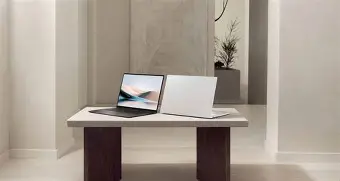
The Asus Zenbook S 16 positions itself as a premium thin-and-light for creators who prioritize a top-tier display, refined build quality, and a dependable battery life. Asus has historically targeted professionals and content creators with the Zenbook S series, focusing on a balance between portability and screen real estate. For users who travel frequently or work in cafés and shared spaces, the Zenbook S 16's chassis and weight are designed to be unobtrusive in daily carry.
Display quality is a cornerstone of this model. The Zenbook S 16 typically emphasizes high-resolution panels, wide color gamut coverage, and factory calibration options — features that matter for photo and video editing, color-critical design work, and any visual task where color fidelity is important. The chassis quality, keyboard and trackpad polish, and thoughtful design touches like hinge behavior or heat routing reflect Asus's focus on user experience rather than raw cost-cutting.
Performance on the Zenbook S 16 is arranged around efficient mobile processors with optional discrete graphics depending on configuration. That means solid single-threaded performance for everyday productivity and good multimedia handling, while higher-end SKUs cater to light to medium content creation workloads. Because Asus builds around thinner designs, sustained heavy workloads may trigger thermal throttling sooner than in larger, heavier machines. However, for most creative workflows that interleave editing, rendering batches, and other tasks, the Zenbook S 16 offers a responsive and pleasant experience.
Chuwi Gamebook 9955Hx Creator Laptop — Value-driven performance and expandability
Chuwi’s Gamebook 9955Hx Creator Laptop targets a different niche: buyers who want maximum hardware bang for their buck. Where Asus emphasizes refinement, Chuwi often focuses on delivering aggressive hardware configurations at lower price points. The 9955Hx name signals that this is a performance-focused device, marketed toward creators and gamers who need strong multi-core CPUs and the option for more substantial discrete GPUs.
In practice, the Chuwi Gamebook typically offers larger cooling systems, more expansive port selections, and often easier access for upgrades (RAM and storage) compared with slim ultraportables. That design choice allows it to sustain higher performance for longer rendering or gaming sessions but at the expense of increased weight and a bulkier footprint. For a user who does most of their heavy work at a desk and values raw performance and upgradeability over extreme portability, the Chuwi proposition can be compelling.
The trade-offs tend to be in fit-and-finish, factory display calibration, and long-term software support. Chuwi often provides competitive hardware for the price, but buyers should factor in potential variability in material quality, slightly louder fan noise under load, and the need to confirm driver and warranty support in their region before purchase.
Discover deals on Laptops & Computers — updated daily.
Shop Amazon →Pros & Cons
Asus Zenbook S 16
- Pros: Excellent display quality and color accuracy; premium build and slim chassis; polished keyboard and trackpad; quiet and efficient under day-to-day loads; good battery life for an ultralight 16-inch laptop; consistent brand support and firmware updates.
- Cons: Higher price relative to raw performance; limited thermal headroom for sustained heavy CPU/GPU workloads; fewer upgrade options in slim designs; fewer ports on some SKUs (necessitating adapters for some workflows).
Chuwi Gamebook 9955Hx
- Pros: Aggressive price-to-performance ratio; larger cooling solution for sustained workloads; more ports and potential for internal upgrades; good option for desk-bound creators who also want gaming capability.
- Cons: Heavier and bulkier, less suited to frequent travel; display may require calibration out of the box for color-critical work; build materials and input devices may feel less premium; regional warranty and driver support can be inconsistent.
Side-By-Side Comparison
| Feature | Asus Zenbook S 16 | Chuwi Gamebook 9955Hx |
|---|---|---|
| Target audience | Mobile creators, professionals who value portability and screen fidelity | Budget-conscious creators and gamers seeking high sustained performance |
| Build & design | Premium, slim, metal chassis; refined aesthetic | Robust but bulkier; more utilitarian design |
| Display | High-quality, color-accurate panel with factory calibration options | Large panel often with good resolution; may need calibration for color-critical tasks |
| Performance profile | Efficient mobile CPUs with optional discrete GPU; great for mixed workloads | HX-class processors and larger GPUs geared toward sustained performance |
| Thermals & noise | Quieter in normal use; throttles earlier under long bursts | Stronger sustained cooling; can run louder under load |
| Battery life | Longer battery life in typical office/creative workflows | Shorter battery life when configured for maximum performance |
| Ports & expandability | Fewer ports on thin models; limited internal upgradeability | More ports and easier access to RAM/SSD upgrades |
| Value | Premium price for refinement and brand support | Better raw hardware value but with trade-offs on finish and support |
| Support & warranty | Established global support channels and frequent updates | Varies by region; warranty and driver availability should be checked before purchase |
Real-World Use Cases
1. A traveling photographer or social media content creator
For someone who shoots on-location, edits photos and short video clips, and needs a laptop that can be carried all day, the Zenbook S 16 better matches that workflow. The lightweight chassis, long battery life, and accurate display mean edits can be trusted on the go. Accessories like USB-C docking and compact external drives will bolster storage needs without undermining the portability advantage.
2. A freelance video editor working mostly at a home studio
If the work centers on longer timeline renders, color grading, and occasional gaming downtime, the Chuwi Gamebook 9955Hx provides an attractive proposition: stronger sustained CPU/GPU performance and superior thermal headroom mean faster exports for large projects. With a dedicated workspace, the extra weight and noise are less of a penalty, and additional cooling and port options become valuable.
3. A developer or 3D artist who needs a balanced machine
Developers compiling large codebases, or 3D artists rendering previews, need a machine that balances single-threaded responsiveness with multi-core throughput. The choice depends on mobility needs. The Zenbook offers snappier day-to-day responsiveness and better battery life for remote work, while the Chuwi will complete long batch tasks faster when plugged in.
Buying Guide — What to Consider Before Choosing
When deciding between these two designs, buyers should prioritize which aspects of laptop ownership are most important to their workflow. Below are practical considerations and recommended thresholds to help decide.
1. Primary usage pattern
- Mobile editing and client-facing work: Prioritize portability, display accuracy, battery life, and build quality — lean toward the Zenbook S 16.
- Long render jobs / gaming at a desk: Prioritize cooling, sustained performance, and value per dollar — the Chuwi Gamebook 9955Hx is likely more suitable.
2. Display needs
Creators who require accurate color for print or professional video should favor a laptop with factory color calibration, wide gamut support (such as 100% sRGB or a large percentage of DCI-P3), and uniformity. If absolute accuracy is required, plan to budget for an external colorimeter and, when possible, choose the model with better out-of-box calibration.
3. Portability vs. performance trade-off
Ask how often the laptop will travel. If daily transport is expected, a lighter, quieter machine with longer battery life will be more pleasant. If the laptop mostly stays at a desk, a heavier unit that delivers higher sustained performance can increase productivity for intensive tasks.
4. Thermals and noise tolerance
Sustained CPU/GPU loads accentuate thermal design. If the user tolerates fan noise while gaming or rendering, the performance-focused cooling of a Chuwi-like machine will pay dividends. For frequent meetings, quiet operation matters more.

5. Ports and expandability
Consider whether the laptop needs multiple external drives, SD cards, HDMI outputs, Ethernet, or legacy USB-A peripherals. Many slim ultrabooks reduce port count and rely on dongles. If expansion or future upgrades (RAM, secondary SSD) are important, make sure the specific configuration allows easy access.
Discover deals on Laptops & Computers — updated daily.
View Offers →6. Software and support
Brand support affects long-term ownership. Established OEMs generally offer predictable warranty channels, driver updates, and accessory ecosystems. Lesser-known brands can save money but sometimes require extra effort to secure drivers, spare parts, or repairs locally.
7. Budget and total cost of ownership
Beyond the sticker price, consider accessories, docks, external displays, and any calibration hardware. A slightly more expensive, reliable laptop can end up being cheaper over time when factoring in fewer repairs, longer resale value, and less time wasted on workarounds.
8. Future-proofing
Look for configurations with generous RAM and fast SSDs, as these are the easiest components to saturate with creative workloads. If choosing the Chuwi for its upgradeability, ensure that the desired parts are available and that upgrades are user-serviceable.
How to Test Before You Buy (or Immediately After)
When evaluating either laptop in person or after unboxing, run these practical checks:
- Open a few high-resolution images or a short 4K clip and check the display's color uniformity and viewing angles.
- Run a real-world workload: export a short video timeline or start a compilation job to see how performance holds over 15–30 minutes and note any thermal throttling or fan behavior.
- Check battery life in a mixed workload scenario (web browsing, document editing, light photo editing) to see if it matches expectations.
- Assess the keyboard and trackpad feel during extended typing sessions — a comfortable input can markedly improve day-to-day experience.
- Verify port placement suits the workspace and confirm the presence or absence of useful connectors like an SD slot or HDMI.
Conclusion
Both the Asus Zenbook S 16 and the Chuwi Gamebook 9955Hx Creator Laptop have strengths that suit different kinds of buyers. The Zenbook S 16 is geared toward those who value portability, refined hardware, and a display that can be trusted out of the box — ideal for on-the-go creators who need a reliable, pleasant machine to carry every day. The Chuwi Gamebook 9955Hx, by contrast, is aimed at buyers who prioritize the best possible raw hardware performance and expandability for the money, especially when the laptop will be used primarily at a desk.
Ultimately, the decision rests on which compromises a buyer is willing to make: premium design and calibrated displays versus larger cooling budgets and upgrade potential. By matching the laptop choice to real work patterns — whether that means frequent travel, long render jobs, or a mix of both — buyers can choose the machine that will be the most productive and least frustrating over the life of their investment.